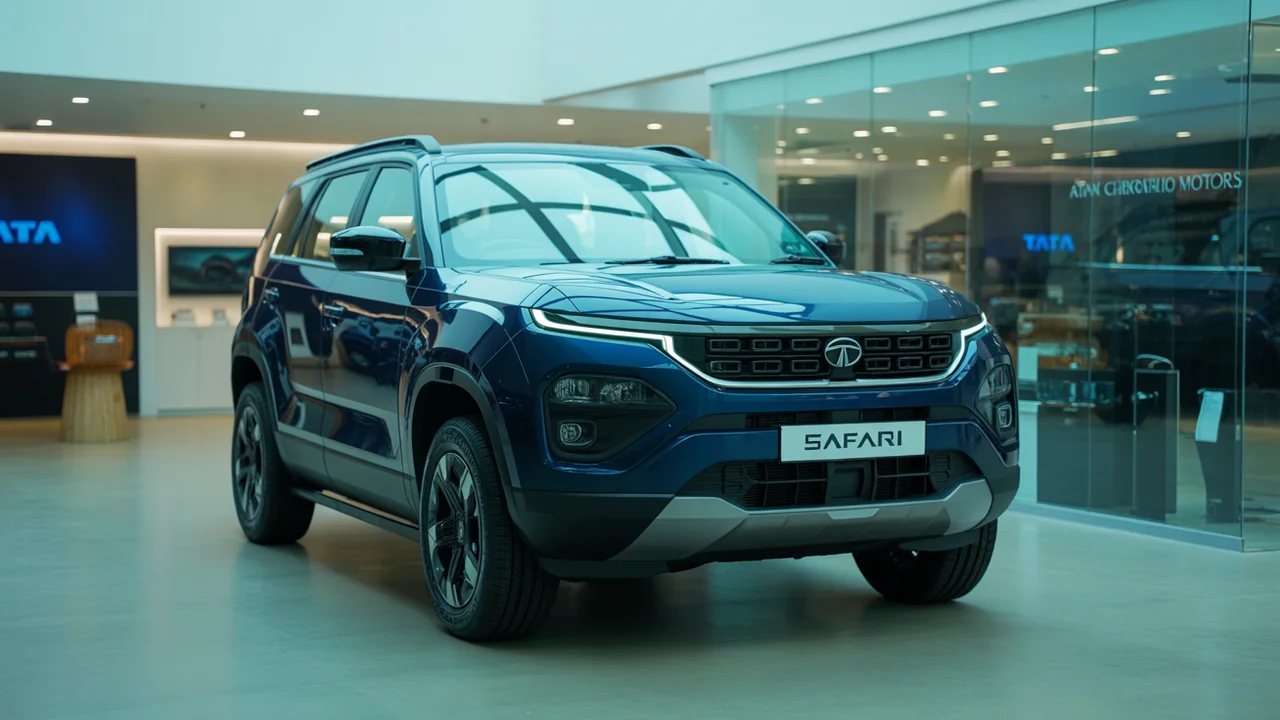
Tata Safari 2026 keeps diesel at the centre of its flagship pitch
Tata Motors’ Safari has long been positioned as the brand’s flagship SUV for Indian families who want space, road presence, and long-distance comfort. For 2026, the Safari continues to lean on a key strength that still matters to many buyers: diesel power, paired with a claimed mileage figure of up to 16 kmpl.
While the broader market is steadily adding more petrol, hybrid, and electric options, the Safari’s diesel focus signals Tata’s intent to serve customers who rack up highway kilometres and prefer the familiar torque-heavy driving feel.
Diesel power remains a practical draw for highway users
In real-world Indian conditions—mixed city traffic, long expressway runs, and fully loaded trips—diesel engines are often chosen for their pulling power and relaxed cruising. For owners who regularly travel with five to seven passengers and luggage, strong low-end torque can translate into fewer gear changes and easier overtakes.
The 2026 Safari’s continued diesel positioning is likely to appeal to buyers in states and usage patterns where long-distance travel is common, including intercity commutes and frequent family road trips.
Claimed 16 kmpl mileage: what it means for buyers
The headline number being discussed is up to 16 kmpl. In practical terms, fuel efficiency depends on traffic, driving style, tyre pressure, load, and AC use—especially in large SUVs. Still, a figure around this mark is meaningful in a segment where running costs are a major part of the purchase decision.
For many Indian households comparing full-size SUVs, mileage is not just a spec-sheet detail; it affects monthly budgets, especially for users doing regular highway runs.
Where the Safari sits in India’s SUV landscape
The Safari competes in a space where buyers expect a mix of comfort, safety equipment, and features, along with the ability to handle rough patches of road without feeling fragile. Its image has also been tied to being a family-first SUV—something that matters in a market where one vehicle often needs to do everything.
By emphasising diesel and efficiency, Tata appears to be reinforcing the Safari’s role as a long-distance companion rather than pushing it into a niche or lifestyle-only corner.

What prospective owners should consider before deciding
For buyers considering the Tata Safari 2026 mainly because of diesel power and mileage, it’s worth checking a few basics before booking: typical daily running, home parking and usage in city traffic, and whether most travel is within city limits or on highways.
Also keep in mind that diesel ownership experience can vary by region due to local regulations and policy changes. It’s sensible to verify registration rules and any diesel-related restrictions applicable in your city before making a final call.
FAQs
1) What is the claimed mileage of the Tata Safari 2026 diesel?
It is being discussed with a claimed figure of up to 16 kmpl, though actual mileage can vary with driving conditions.
2) Is the Tata Safari 2026 focused on diesel power?
Yes, the key talking point is that it continues to reinforce its flagship positioning with diesel power aimed at long-distance usability.
3) Will the Safari 2026 be suitable for frequent highway trips?
It is likely to suit highway users, as diesel SUVs typically offer strong torque and comfortable cruising for long drives.
4) What should buyers check before choosing a diesel SUV in India?
Check local diesel-related rules for your city, your expected running, and test-drive in both city traffic and open-road conditions to match your use case.