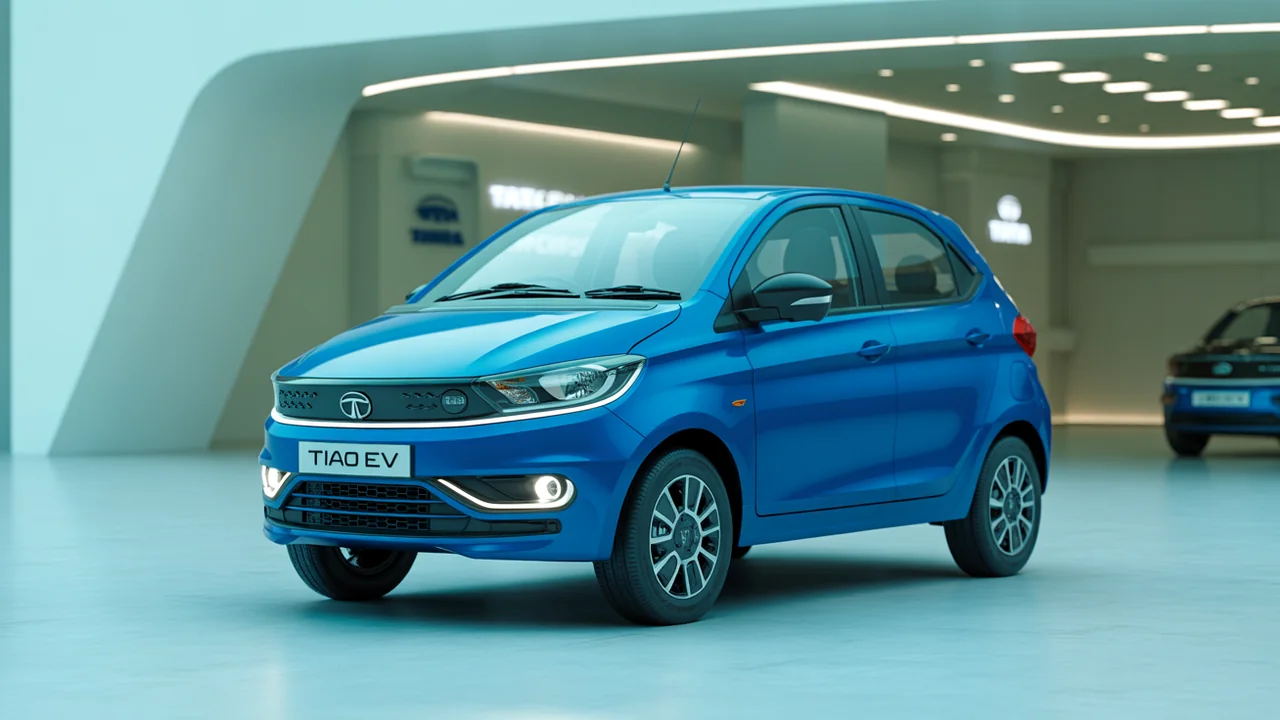
Tata Tiago EV 2026 brings a familiar city car back into focus
Tata Motors’ Tiago EV has been one of the more visible entry points into electric mobility for Indian city buyers. With the 2026 iteration, the conversation stays largely the same: a compact hatchback aimed at daily commuting, now being framed around a practical single-charge range figure of up to 315 km.
For many first-time EV shoppers, especially in metros and tier-2 cities, the appeal is less about chasing big numbers and more about predictable usage—office runs, school drops, short errands, and occasional weekend drives.
315 km claimed range: what it means for everyday driving
The headline number being highlighted is a claimed driving range of up to 315 km on a full charge. In real-world conditions, EV range often varies with speed, traffic, air-conditioning use, road gradients, and driving style.
For urban users, the takeaway is simpler: a higher rated range generally translates to fewer charging stops during the week. Many owners typically charge at home overnight, treating the EV like a phone—plug in when convenient rather than waiting for the battery to get low.
Why compact EVs are gaining ground in Indian cities
India’s EV adoption has been strongest where driving patterns are predictable and parking is tight—exactly the use case of small hatchbacks. A compact footprint helps in crowded lanes and small parking slots, while running costs can be easier to manage compared to fuel-powered alternatives, depending on electricity tariffs and usage.
For households considering a second car, a small EV can also become the default daily driver, leaving the petrol/diesel vehicle for longer highway trips.
Charging reality: home setups and public networks
Charging access remains a key deciding factor. Many urban buyers prefer home charging because it is simpler and often cheaper than relying on public charging. Apartment residents may still face challenges depending on society permissions, dedicated parking availability, and metering.
Public charging networks are expanding, but coverage can differ sharply from one city to another. In practice, buyers often look at chargers near home, office, and regular routes rather than citywide counts.

What buyers tend to check before choosing an EV like the Tiago
Beyond the range figure, shoppers usually compare total cost of ownership, warranty terms, service reach, and how the car behaves in stop-and-go traffic. Cabin comfort, boot space for daily luggage, and air-conditioning performance in Indian summers also matter more than many expect.
It also helps to estimate weekly running: if a typical commute is 20–30 km a day, a higher rated range can reduce charging frequency and range anxiety, even if real-world numbers are lower than the claim.
Practical impact: a small EV with fewer compromises
For the urban audience, the bigger story is not that every drive will stretch to 315 km, but that an entry-level EV category is steadily becoming more usable. If the 2026 Tiago EV sustains this positioning, it may continue to serve as a mainstream option for city-centric mobility—especially for buyers who value predictable running and easy maneuverability.

FAQs
1) Is the 315 km range figure the real-world range?
No. It is a claimed full-charge range; real-world range typically varies based on traffic, speed, AC use, and driving style.
2) Is the Tata Tiago EV 2026 suitable for highway trips?
It can handle occasional highway use, but most buyers consider it primarily for city driving; trip planning and charging availability matter more on highways.
3) Can I rely only on public chargers for daily use?
Some owners do, but most find home charging more convenient. Public charging availability differs by city and neighbourhood.
4) What should I check before buying an EV in this segment?
Check your daily running, charging access (home or nearby), service support, warranty coverage, and expected real-world range in your driving conditions.