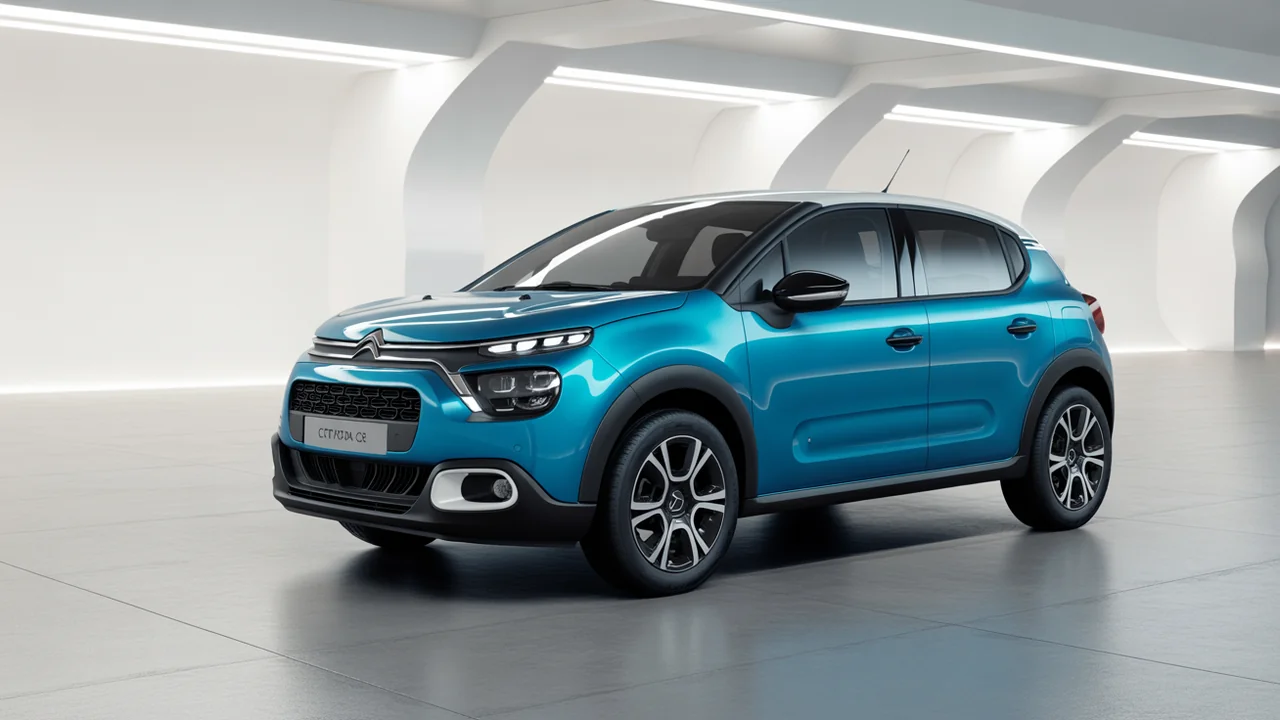
Citroën eC3 2026 aims for the budget EV sweet spot
Citroën is preparing an updated eC3 for 2026, positioning it as an affordable electric hatchback for buyers who want a simpler, city-first EV without stepping into premium pricing. For India, where cost, range, and running expenses typically decide the deal, the eC3’s focus on a lightweight platform and a claimed 320 km range could make it a serious shortlist option.
The eC3 has already been one of the more accessible EV entries in the market. The 2026 update is expected to build on that formula rather than reinvent it, with practical improvements aimed at daily usability.
Lightweight platform: what it could mean on Indian roads
The headline change being discussed is a lightweight platform approach. In simple terms, reducing weight can help an EV in two big ways: it can improve efficiency (more km from the same battery) and make the car feel less strained in stop-go traffic.
For India’s mixed driving conditions—short city runs, uneven roads, and frequent braking—a lighter EV can also translate into more consistent real-world range and potentially lower wear on tyres and brakes. The trade-off, as always, depends on execution: buyers will be looking for solid build quality and safety equipment alongside weight savings.
Claimed 320 km range: expectations vs real-world use
Citroën’s reported 320 km figure is likely an ideal-cycle claim, not a guaranteed everyday outcome. In Indian conditions, real-world range typically varies with speed, air-conditioner use, passenger load, and road gradient.
For most urban users, even a lower real-world number can still work if charging is convenient. A practical way to look at it is weekly usage: commuting, school runs, and errands may be covered with fewer charging sessions if the car can consistently deliver a healthy buffer beyond daily needs.
Who the 2026 eC3 is likely to suit
This kind of EV usually targets first-time electric buyers and families looking for a second car primarily for city driving. It may also interest fleet operators if pricing and uptime support are competitive.
In India, the strongest interest often comes from buyers comparing an EV’s monthly running cost to petrol alternatives, while also considering home charging availability in apartments or independent houses.
What buyers will watch: charging, features, and after-sales
Range is only part of the story. Potential customers will closely track charging time details (especially DC fast-charging capability), warranty terms for the battery, and service network coverage in Tier 2 and Tier 3 cities.
Features also matter in the affordable segment, but priorities tend to be practical: air-conditioning performance, ground clearance, usable boot space, and a predictable ownership experience rather than flashy additions.
India EV market context: why this launch window matters
By 2026, India’s affordable EV space is expected to be more crowded, with multiple brands pushing value-driven electric hatchbacks and compact SUVs. In that environment, an eC3 update that improves efficiency and range—without pushing prices up sharply—could help Citroën stay relevant among budget-focused shoppers.
Final judgment will depend on the India-spec configuration, pricing, and how well the car holds up in real-world conditions once customer deliveries begin.
FAQs
1) Is the 320 km range for the Citroën eC3 2026 a real-world figure?
It is expected to be a certified/claimed figure. Real-world range in India can be lower depending on traffic, AC usage, speed, and load.
2) What does a lightweight platform change for an EV?
A lighter car can improve efficiency and responsiveness in city driving, potentially helping range and reducing energy consumption.
3) Will the 2026 eC3 be suitable for highway trips?
It can be, but suitability depends on real-world range, fast-charging support, and charging infrastructure on your route.
4) When is the Citroën eC3 2026 expected in India?
The update is being discussed for 2026; official India launch timing and specifications would need confirmation from Citroën.