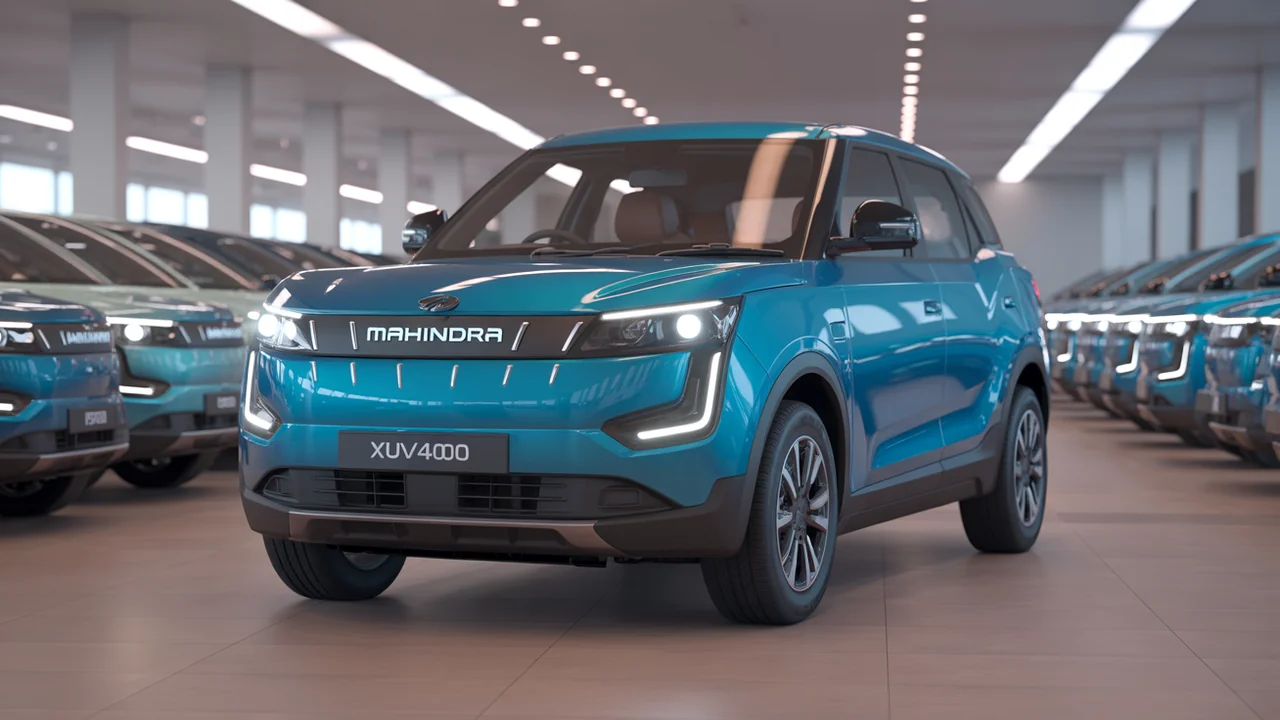
Mahindra XUV400 EV 2026: what’s new
Mahindra’s XUV400 EV is back in the spotlight for 2026, with updates focused on the areas Indian buyers tend to care about the most: real-world usability, efficiency, and smoother performance. The headline change is an improved powertrain paired with a certified range figure of 350 km.
While the XUV400 has already been a familiar name in India’s EV space, the 2026 version looks aimed at making the package feel more mature rather than radically different.
Improved powertrain: what it could mean on the road
Mahindra is positioning the 2026 XUV400 EV around a revised powertrain setup. In practical terms, that typically translates into better calibration for throttle response, more consistent acceleration, and improved energy management in city traffic.
For daily driving, owners usually notice these changes as smoother low-speed crawling, less “jerkiness” in stop-go conditions, and more predictable regeneration when lifting off the accelerator.
350 km certified range: the key number
The XUV400 EV 2026 carries a 350 km certified range claim. For Indian buyers, certified figures are a useful benchmark, but actual driving range can vary depending on speed, traffic, cabin cooling use, tyre pressure, and road conditions.
In typical mixed driving, many EVs deliver a range that’s lower than the test-cycle number—especially on fast highway runs. Still, a stronger certified figure generally signals improved efficiency, which can help reduce range anxiety for commuting and weekend use.
Who this matters to in India
The updated range and powertrain tuning are likely to appeal to commuters in large cities who want fewer charging stops during the week. It also matters to buyers in tier-2 cities where charging networks are growing but still not as dense as metros.
For families, the bigger question is often whether the EV can handle routine errands plus occasional outstation trips without constant planning. A 350 km certified claim aims to move that conversation in a more confident direction.
Charging expectations: what to keep in mind
Range upgrades are only half the story. Charging speed, charger availability, and home charging convenience still define day-to-day ownership. For many Indian households, overnight home charging remains the most stress-free method, while public chargers act as backup on busy days.
Prospective buyers should still check local charging density, apartment society rules for chargers, and nearby fast-charging options before making a decision.
How it fits into the current EV market
India’s EV market is moving quickly, with buyers now comparing not just range but also software experience, service support, and long-term battery confidence. Updates like a more efficient powertrain are important because they improve the fundamentals without changing how owners use the car.
With the XUV400 EV 2026, Mahindra appears to be leaning into steady improvements—trying to make the vehicle feel more polished as competition heats up.

What to watch next
Buyers will likely look for more clarity on real-world range in Indian conditions, charging performance, and whether the updated powertrain improves highway efficiency. Detailed specifications, variant-wise features, and pricing will ultimately decide how strong the XUV400 EV’s 2026 push becomes.
FAQs
1) What is the certified range of the Mahindra XUV400 EV 2026?
It is reported to have a certified range of 350 km.
2) Will the XUV400 EV 2026 deliver 350 km in real-world driving?
Real-world range can be lower or higher depending on speed, traffic, AC usage, terrain, and driving style.
3) What does an “improved powertrain” usually change for drivers?
It often results in smoother acceleration, better efficiency, and more refined regenerative braking behaviour.
4) Is the XUV400 EV 2026 suitable for long trips in India?
It can be, but long-trip convenience depends heavily on highway charging availability and your route planning.