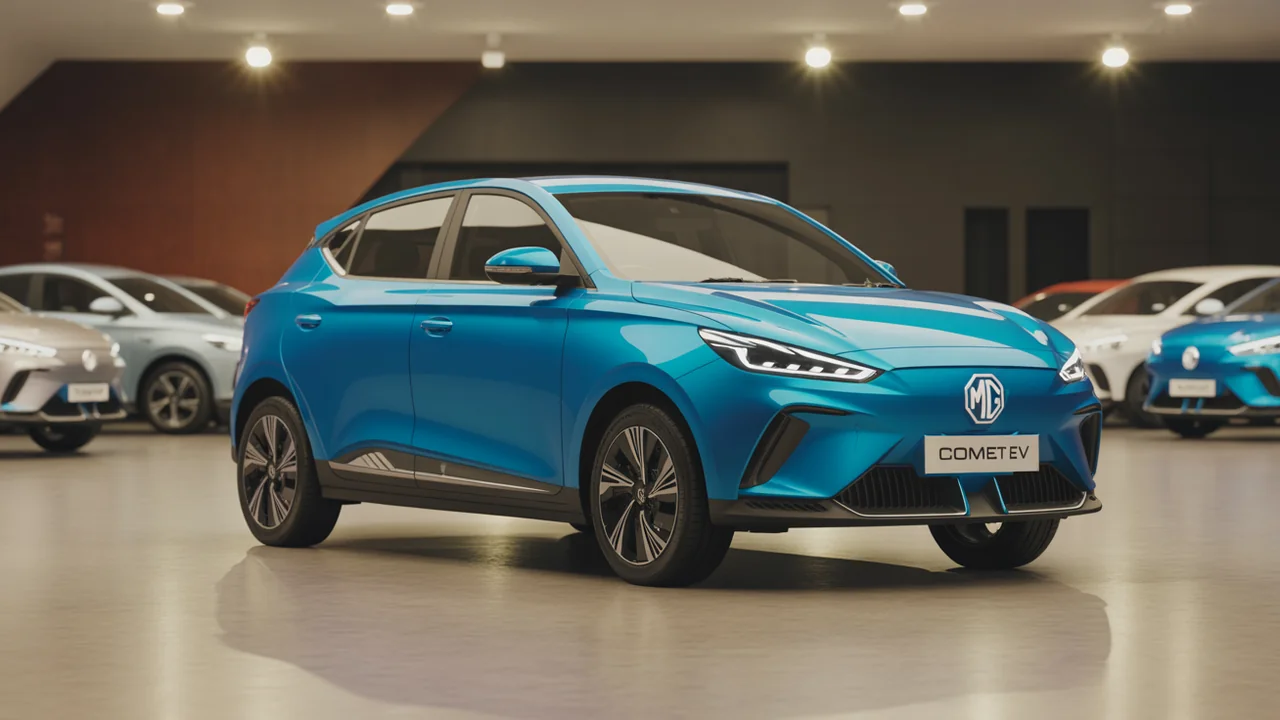
MG Comet EV 2026 aims to stay focused on city driving
MG is expected to continue pushing its smallest electric car in India with the MG Comet EV 2026. The update is being talked about as a city-first EV that keeps the same ultra-compact footprint while offering a claimed driving range of up to 230 km, aimed at daily commutes, short errands, and tight parking spots.
In a market where many EV launches focus on larger SUVs, the Comet EV’s pitch remains different: small size, easy maneuvering, and low running costs for urban users.
Ultra-compact size remains the key talking point
The Comet EV has been positioned as a two-door, four-seat urban runabout, designed primarily for congested roads and short trips. For buyers in cities like Mumbai, Delhi-NCR, Bengaluru, and Pune, a small turning radius and easier parking can matter as much as outright performance.
MG’s approach with the Comet has generally been about practicality over highway touring, and the 2026 version is expected to stick to that formula.
Claimed 230 km range: what it means in everyday use
The headline figure being discussed is a claimed range of up to 230 km. For city driving, this could translate into several days of commuting for many users, depending on traffic conditions, driving style, air-conditioning usage, and passenger load.
As with any EV, real-world range typically varies. Stop-go traffic can sometimes be efficient for EVs due to regenerative braking, but heavy AC usage and aggressive acceleration can reduce the distance you’ll actually get.
Built for short trips, not long-distance touring
The MG Comet EV is usually considered best suited for urban and near-urban use rather than frequent highway runs. A compact car can feel less relaxed at higher speeds, and public charging availability between cities still varies widely across India.
For households that already have a petrol/diesel car for long trips, the Comet EV can play the role of a second car meant for daily city use.
What buyers in India typically look for in this segment
In India’s entry-level EV space, shoppers often prioritise a few basics: predictable range for daily routes, low maintenance, and access to charging at home or at work. Compact dimensions also matter for apartment parking and narrow lanes.
If MG keeps pricing and feature packaging competitive, the Comet EV 2026 could continue to appeal to first-time EV buyers and families looking to cut fuel costs for routine travel.
Charging and ownership: the practical questions
For many potential owners, charging convenience is as important as the battery spec. Home charging is usually the simplest solution, while workplace charging can make ownership even easier. Public charging helps, but depending on location, it may not always be a reliable daily plan.
Prospective buyers typically consider running costs, warranty coverage, service network reach, and how well the car fits their daily routes before deciding.
FAQs
1) Is the MG Comet EV 2026 suitable as a primary car in India?
It can be, if most of your driving is within the city and you have access to convenient charging. For frequent highway travel, many buyers prefer a larger EV or a second vehicle.
2) What does a claimed 230 km range mean in real-world conditions?
Actual range can vary based on traffic, speed, tyre pressure, air-conditioning use, and driving style. City use may deliver better efficiency than constant high-speed driving.
3) Who is the MG Comet EV mainly aimed at?
It’s generally aimed at urban commuters, first-time EV owners, and households looking for a compact second car for daily errands and office runs.
4) Can the MG Comet EV handle occasional longer trips?
Occasional longer trips are possible with planning, but it’s primarily designed for city mobility. Charging stops and comfort at higher speeds are key factors to consider.