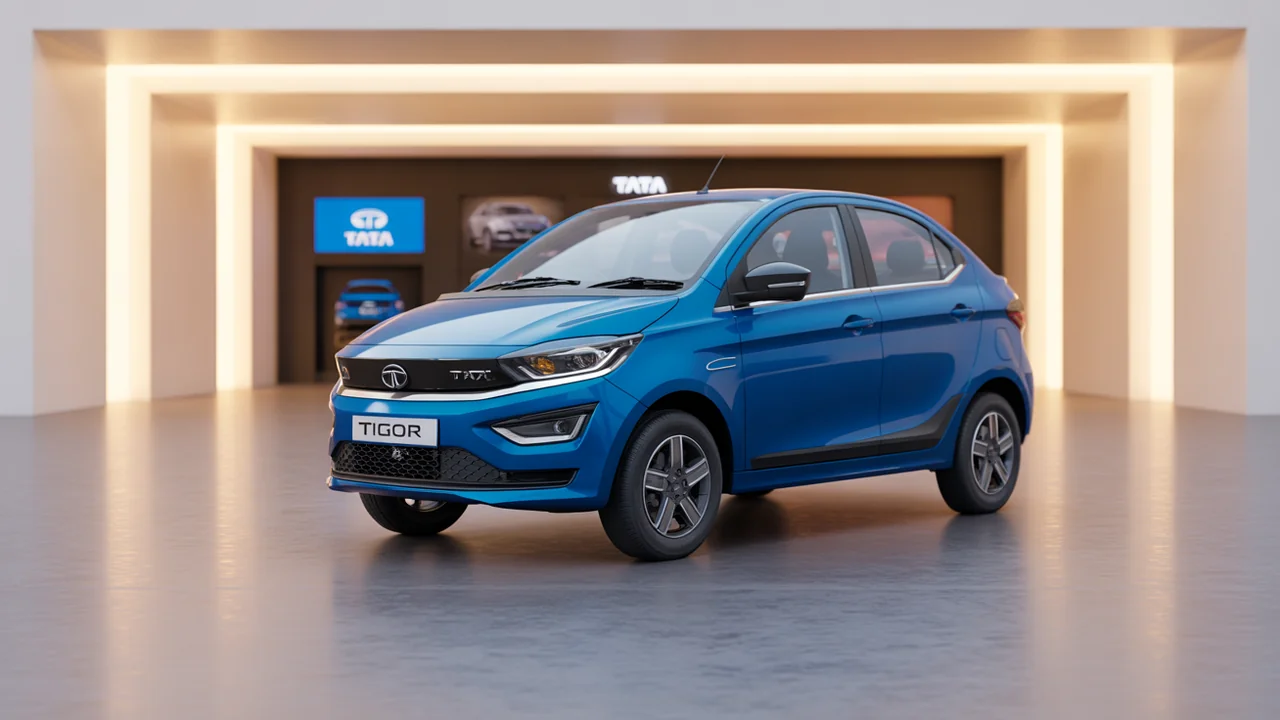
A familiar compact sedan with an electric focus
Tata Motors’ Tigor EV for 2026 is drawing attention from budget-minded electric car shoppers in India, largely because it sticks to a compact, city-friendly footprint while promising a claimed driving range of up to 315 km. For buyers looking at EV ownership without moving to a bigger (and usually pricier) SUV-style body, the Tigor EV continues to sit in a practical middle ground.
The car’s sedan-like shape and manageable size have long made it a common pick for urban commuting, and the 2026 update is being viewed in that same light—simple, usable, and aimed at everyday driving rather than flashy features.
Why the 315 km range matters for everyday users
Range remains one of the biggest deciding factors for first-time EV buyers. A claimed 315 km figure, if achieved close to real-world conditions, can cover several days of typical city use for many drivers, reducing the frequency of charging stops.
That said, real driving range can vary depending on traffic, speed, air-conditioning use, load, tyre pressure, and driving style. For Indian conditions—especially in heavy traffic and hot weather—buyers usually plan with a buffer.
Compact design still works in crowded Indian cities
In busy markets, narrow lanes, and tight parking spots, the Tigor EV’s compact dimensions can be a key advantage. It’s easier to manoeuvre than larger SUVs, and that can translate to less stress in daily commutes.
Many budget EV shoppers also prefer a straightforward car that fits standard apartment parking layouts and doesn’t demand special planning for home charging cable routing.
Who is considering the Tigor EV in 2026?
The Tigor EV is being looked at by a few distinct groups: families wanting a second car for city runs, office commuters doing predictable daily distances, and buyers transitioning from small petrol cars who want to control running costs.
It also continues to attract interest from fleet and shared-mobility operators, where predictable routes and planned charging can make an EV’s running economics easier to manage.
Charging and ownership: what buyers are weighing
Charging access remains a make-or-break point. Many prospective owners are checking whether they can install a home charger, what their society rules allow, and how close reliable public charging is to their routine routes.
Buyers are also paying closer attention to battery warranty terms, service reach in their city, and the long-term cost of ownership. With EVs, peace of mind often comes from clear support rather than just brochure figures.
What to check before making a decision
For anyone evaluating the 2026 Tigor EV, it’s worth doing a practical test drive that includes stop-go traffic and a short highway stretch, then comparing the estimated range shown by the car with actual use.
It also helps to map a charging plan: home charging time, nearby fast-charging options, and a backup solution for days when you return late or need a quick top-up.
FAQs
1) Is the 315 km range figure realistic in Indian conditions?
It’s a claimed range, and real-world numbers can be lower depending on traffic, air-conditioning use, and driving style. Many owners plan with a buffer for daily use.
2) Is the Tata Tigor EV 2026 suitable as the only car in a family?
It can work if your driving is mostly city-based and you have dependable charging access. For frequent long intercity trips, charging network availability becomes the key factor.
3) What kind of buyers are most likely to consider the Tigor EV?
Office commuters, city-focused families looking for a second car, and value-conscious buyers moving from small petrol cars are common interest groups.
4) What should I verify before buying an EV like the Tigor EV?
Check home charging feasibility, nearby public charging reliability, battery warranty coverage, service availability in your city, and take a real-world test drive to understand range behavior.